

By Marco Elian Ruiz | Updated on January, 2026 | 🕓 18 minutes
Key Highlights
- Why are digital nomad visas becoming an alternative to traditional overseas education?
- Can remote work provide better language immersion than university classrooms?
- Are international student networks less valuable than people assume?
- How does remote work create real cross-cultural communication skills?
- Why are more young professionals choosing “trial residency” over expensive degree programs?
- What hidden risks do digital nomad lifestyles create?
- Which countries offer the best digital nomad visa pathways in 2026?
1. When “Studying Abroad” Is No Longer the Only Highway to an International Life
In 2019, a former colleague of mine, Elena, spent $42,000 on a one-year master’s degree in London. Her expectations were straightforward: improve her English, build an international network, and add an “overseas background” to her résumé. But after graduation, she realized something unsettling. Her Indian classmates returned to Mumbai, her Nigerian classmates moved to Toronto, and the Chinese and British students were already busy with their own lives. The “global network” she had been promised never truly materialized.
At the same time, another friend of mine, Marcus, a UX designer from South Africa, relocated to Lisbon in 2024 through Portugal’s D8 digital nomad visa. His roommates in a shared apartment included a Brazilian blockchain developer and a German marketing consultant. Six months later, Marcus had not only reached conversational Portuguese fluency, but had also landed a remote contract with a Dutch company through a roommate referral.
These two stories reveal a structural shift that is happening quietly, but rarely discussed systematically:
The core selling points of traditional study abroad programs — language immersion, cross-cultural competence, international networking, and career mobility — are increasingly being replaced by remote work in ways that are cheaper, faster, and often more effective.
The data reflects this trend. In fall 2025, new international student enrollment in the United States fell by 17%, marking the first decline after four consecutive years of post-pandemic growth. Meanwhile, the global digital nomad population is projected to surpass 60 million in 2025. More than 55 countries and territories have already introduced residency permits specifically designed for remote workers.
This does not mean studying abroad has lost all value. It means that the assumption that “study abroad is the best — or only — way to gain international experience” is beginning to collapse.
For many young people, continuing to make decisions based on that old assumption may be turning into an extremely expensive trap.
2. How Remote Work Is Dismantling the Four Traditional “Selling Points” of Studying Abroad
2.1 Selling Point #1: “Language Immersion” — Classroom English Is Not Survival English
Traditional Logic:
If you spend two years in an English-speaking country, your English will naturally become fluent.
The Reality:
Many international students fall into what could be called the “expat bubble trap.” A 2024 internal survey from University College London found that more than 40% of Chinese international students admitted they spent most of their time speaking Chinese.
There is also a major gap between classroom English, academic English, and real-world professional communication. You may be able to write a 5,000-word literature review, yet still struggle to explain a project requirement to a local client in a crowded bar.
Why Remote Work Can Create Better Immersion
Take Mexico City as an example.
In 2024, Camilo, a remote customer support representative from Colombia, relocated there using Mexico’s temporary resident visa (Rentista). Instead of living in the digital nomad-heavy Condesa district, he intentionally rented a room in Roma Norte with two local Mexican graphic designers.
Within three months, his Spanish evolved from “ordering food” level to participating in actual design critiques.
As he put it:
“In a classroom, if you use the wrong grammar, the teacher corrects you. In a shared kitchen, if you misuse a verb tense, your roommate just stares at you in confusion and starts explaining with hand gestures. That survival pressure works better than any language school.”
Practical Strategies
- Choose cities with moderate English penetration, such as Lisbon, Kraków, or Penang. You avoid complete dependence on your native-language community while still being able to function.
- Avoid the “digital nomad bubble.” Do not live exclusively in foreigner-oriented apartments. Try finding local roommates through Facebook groups.
- Create “local language days.” Set aside specific days each week when you force yourself to handle daily life entirely in the local language.
2.2 Selling Point #2: “Cross-Cultural Competence” — Observation Is Not Survival
Traditional Logic:
Doing group projects with international classmates builds cross-cultural skills.
The Reality:
71% of hiring managers say they have already hired employees who work in cross-border remote teams. Yet most study abroad programs never teach students how to collaborate effectively with coworkers across time zones and radically different communication cultures.
International student group projects often become “everyone does their own part.” Real cultural friction — such as how to politely reject a Japanese client request, or how to balance Brazilian flexibility around deadlines with American expectations for hard cutoffs — is rarely simulated in classrooms.
Why Remote Work Creates More Authentic Cross-Cultural Experience
Consider Diana, a virtual assistant from the Philippines who joined a fully distributed American SaaS company in 2024.
Her colleagues were spread across 12 time zones:
- Engineers in Ukraine
- Designers in Argentina
- Product managers in Nigeria
- Founders in Canada
Her biggest culture shock was not language — it was silence.
The Canadian founder would openly write in Slack:
“This approach doesn’t work.”
Meanwhile, Ukrainian engineers almost never disagreed publicly. Instead, they would privately message:
“Perhaps we could consider another option.”
Diana spent three months learning how to interpret these signals and act as a bridge between communication styles.
This is not simply “observing” cultural differences.
It is surviving inside them every day — exactly the type of experience employers increasingly value.
Practical Strategies
- Start with small asynchronous projects on platforms like Upwork or Toptal. Even low-paying work can provide valuable collaboration experience.
- Keep a “cultural conflict journal.” Document communication misunderstandings, the context, reactions, and eventual solutions. These stories become powerful interview material.
- Position yourself as a “timezone bridge.” If you are geographically located between Asia and the Americas, proactively coordinate across teams. That becomes a unique professional advantage.
2.3 Selling Point #3: “International Networking” — Homogeneous Strong Ties vs. Diverse Weak Ties
Traditional Logic:
Your classmates become your future global network.
The Reality:
Study abroad networks are often highly homogeneous — same university, same major, same age group. After graduation, maintaining these connections becomes difficult.
Your London School of Economics classmate may end up in Hong Kong investment banking while you move to a Berlin startup. Geographic and industry fragmentation gradually turns “networking” into little more than occasional LinkedIn likes.
Remote Work Builds a Different Type of Network
In 2025, Arjun, a product manager from India, met three people at a coworking space in Bali who changed his professional trajectory:
- A former Swedish investor building a climate-tech fund
- A Lebanese entrepreneur working on Middle Eastern e-commerce
- A British journalist writing a book about AI ethics
Six months later, none of them directly gave Arjun a job.
But they gave him something arguably more valuable:
information asymmetry.
The Swedish investor warned him that hiring freezes in Europe’s climate-tech sector were about to end.
The Lebanese entrepreneur shared real customer spending behavior in Gulf e-commerce markets.
The British journalist invited him to contribute a chapter to a book about AI development in the Global South.
As Arjun explained:
“Weak ties won’t necessarily refer you for jobs. But they give you non-obvious information. Early in your career, that’s often more valuable.”
Practical Strategies
- Choose cross-industry coworking spaces instead of industry-specific hubs.
- Attend nomad conferences and networking events such as Nomad Cruise.
- Practice “give before you ask.” Share unique insights about your own market or region to build trust and credibility.

2.4 Selling Point #4: “Career Mobility and Immigration Pathways” — High-Cost Commitment vs. Low-Cost Experimentation
Traditional Logic:
Study abroad → work visa → permanent residency is the safest immigration path.
The Reality:
Studying abroad is often a high-cost, one-directional bet.
If you choose the wrong country, wrong degree, or wrong city, the sunk cost becomes enormous.
In early 2026, UK student visa applications dropped by 31%, partly because the “study-to-immigration” pathway became increasingly uncertain:
- Will you find a job after graduation?
- Will visa rules change?
- Will living costs become unmanageable?
Why Remote Work Enables Lower-Risk Exploration
Take Sophie, a freelance writer from Canada who dreamed of relocating to Southern Europe but could not decide between Portugal, Spain, or Italy.
Instead of immediately committing to a degree program, she:
1. Lived in Georgia for four months using its one-year visa-free stay policy
2. Spent eight months in Valencia through Spain’s digital nomad visa
3. Eventually settled in Porto through Portugal’s D8 visa
As she described it:
“If I had spent CAD 50,000 on a Portuguese master’s degree only to discover I hated the bureaucracy, I would have been devastated. Instead, I spent less than CAD 5,000 testing three countries before making an informed decision.”
Practical Strategies
- Treat digital nomad visas as a “research phase,” not necessarily a permanent replacement for education.
- Prioritize visas that can be renewed or converted into permanent residency.
- Develop a “portfolio approach” to residency rather than going all-in on one country immediately.
3. Remote Work Is Not a Magic Solution: Three Hidden Traps
Trap #1: “Consuming Culture” Instead of Immersing in It
Many digital nomads live in Airbnbs, work from trendy cafés, and socialize only with other nomads.
This is fundamentally similar to international students staying exclusively within co-national circles:
it is cultural consumption, not cultural immersion.
Lucas, a Brazilian remote developer, spent eight months in Lisbon but still barely spoke Portuguese beyond “Bom dia.”
His daily life revolved around:
- Brunch at Time Out Market
- Coding at coworking spaces in LxFactory
- Drinking with English-speaking nomads in Cais do Sodré
He never attended local community events or participated in Portuguese-language groups.
Self-Assessment Questions
- Can you name three local people you regularly interact with?
- Have you attended events not conducted in English?
- Do you know what political or social issues locals are currently frustrated about?
Trap #2: “Freedom” Can Become Another Form of Stagnation
No office politics. No commuting. No fixed hierarchy.
But after three years, your résumé may consist only of fragmented freelance projects.
Self-Assessment Questions
- Are you building transferable deep skills, or just location-independent shallow tasks?
- Are you intentionally seeking work that exposes you to full project lifecycles?
- Have you built evidence of remote leadership, such as managing distributed teams or designing asynchronous workflows?
Trap #3: The “Golden Age” of Digital Nomad Visas May Not Last
Digital nomad visas are not guaranteed permanent opportunities.
In January 2026, the UAE increased the minimum monthly income requirement for remote work visas from $3,500 to $5,000 and expanded bank statement requirements from three months to six months.
Rising housing costs in countries like Spain and Portugal have also triggered backlash from local residents.
Policies may continue tightening.
Self-Assessment Questions
- Do you have a Plan B if policies suddenly change?
- Are your skills portable enough to survive across different jurisdictions?
- Are you building “policy-resistant” career capital?
4. A Practical Framework: Designing a “Remote Work Instead of Study Abroad” Strategy
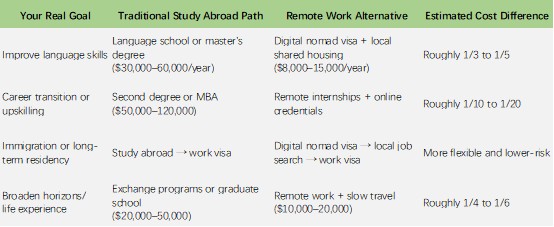
4.1 Step One: Honestly Identify What You Actually Want From Going Abroad
4.2 Step Two: Audit Your Remote-Friendly Skills
Highly Remote-Compatible Skills in 2026
- Programming, data analytics, AI-related work
- Content creation and multilingual translation
- Design and UI/UX
- Digital marketing, SEO, e-commerce operations
- Project management and virtual assistance
If You Don’t Have These Skills Yet
Spend 3–6 months learning online first through platforms such as freeCodeCamp or Coursera specialization programs while simultaneously applying for remote internships or part-time projects.
Do not immediately spend massive amounts of money on international tuition.
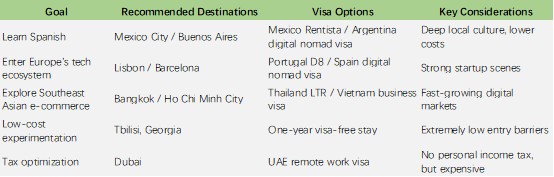
4.3 Step Three: Choose Destinations Based on Goals, Not Trends
4.4 Step Four: Build Verifiable Evidence of Growth
One hidden advantage of formal education is institutional credibility.
Remote workers need to build that credibility themselves.
Practical Approaches
- Use Notion or a personal blog to document cross-cultural project experiences.
- Share thoughtful insights about remote work and local life on LinkedIn.
- Build a portfolio that demonstrates real outcomes and collaboration experience.
In many industries, this can become more persuasive than a diploma alone.
Conclusion: The Default Option Has Changed
Studying abroad used to be the only highway toward international exposure.
Now, it is simply one pathway among many — and often the most expensive, slowest, and least flexible one.
Remote work has not “killed” study abroad.
But it has destroyed the assumption that studying abroad is automatically the best or only option.
In 2026, 84% of international students still list “career advancement” as their primary reason for studying abroad.
If career growth is the real objective, then the question is no longer:
“Where should I study abroad?”
The better question may be:
“Which path allows me to gain the exact skills, experiences, and networks I actually need in the most efficient way possible?”
For many people, the answer may simply be:
a digital nomad visa, a laptop, and the courage to experiment for three months.
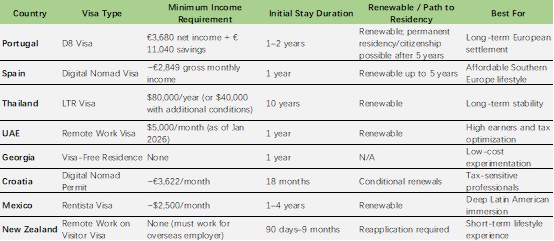
Appendix: Quick Reference Guide to Digital Nomad Visas (2026)
Disclaimer: The following information is compiled from publicly available sources as of May 2026. Immigration policies change frequently. Always verify the latest requirements through official government immigration websites before applying. This article does not constitute immigration, legal, or tax advice.
FAQs
1. Is studying abroad becoming obsolete?
No. Studying abroad still offers valuable academic credentials, research opportunities, and immigration pathways in some countries. However, remote work has weakened the idea that overseas education is the only or best route to gaining international experience, language exposure, or global professional networks.
2. Are employers starting to value remote work experience more than overseas degrees?
In some industries, yes. Employers increasingly value demonstrated cross-border collaboration, asynchronous communication, portfolio-based work, and real-world problem-solving over purely academic international exposure. This is especially true in technology, design, digital marketing, and startup ecosystems.
3. Can remote work really replace language immersion?
It depends on the individual. Remote workers who intentionally integrate into local communities, live with locals, and avoid expat bubbles may experience deeper day-to-day language immersion than many international students who remain socially isolated within their native-language circles.
4. Is a digital nomad visa easier than getting a student visa?
Not always. Some digital nomad visas require proof of stable remote income, savings, insurance coverage, or tax documentation. However, they are often cheaper and more flexible than international degree programs because they do not require tuition payments.
5. Can remote work lead to permanent residency?
In some countries, yes. Portugal and Spain, for example, allow certain digital nomad visa holders to renew their residency and potentially qualify for long-term residency after several years, depending on legal and tax compliance.
References
1. Erasmus Student Network. (2025). ESN Survey 2025: International student mobility trends. Retrieved from https://esn.org
2. InterNations. (2025). Expat Insider 2025: The world through the eyes of expats. Retrieved from https://www.internations.org
3. Nomad List. (2026). Digital nomad statistics and trends 2026. Retrieved from https://nomadlist.com
4. OECD. (2025). International migration outlook 2025. OECD Publishing. https://doi.org/10.1787/migr_outlook-2025-en
5. Remote.co. (2025). The future of remote work: Global hiring trends 2025. Retrieved from https://remote.co
6. Spanish Ministry of Inclusion, Social Security and Migration. (2025). Digital nomad visa requirements. Retrieved from https://www.inclusion.gob.es
7. UK Council for International Student Affairs. (2026). International student statistics: UK higher education 2025/26. Retrieved from https://www.ukcisa.org.uk
8. University College London. (2024). International student integration survey 2024 [Internal research report].
About the Author
Marco Elian Ruiz
Marco Elian Ruiz is a remote work strategist and former freelance consultant who has spent years working across Southeast Asia, Southern Europe, and Eastern Europe while advising independent professionals and distributed teams. His writing focuses on the economics of remote work, digital nomad culture, freelance sustainability, and geographic arbitrage. Marco is particularly interested in the gap between the marketed “freedom lifestyle” and the operational realities of online work, including taxation, client dependency, unstable income cycles, and long-term career resilience for remote workers.
Editorial Transparency Statement
This article is based on publicly available policy documents, international mobility reports, labor market studies, industry publications, and interviews with remote workers and internationally mobile professionals. Some examples and personal stories have been anonymized or reconstructed from multiple real-life cases to protect privacy while preserving the underlying insights.
The purpose of this article is educational and analytical. It is intended to encourage readers to critically evaluate traditional assumptions surrounding international education, migration, and career development.
The publisher does not accept sponsored placements from visa agencies, immigration consultancies, universities, or digital nomad relocation services in connection with this article.
Disclaimer
This article is provided for informational purposes only and does not constitute legal, immigration, tax, educational, or financial advice. Visa regulations, residency pathways, tax obligations, and remote work policies change frequently and vary by jurisdiction.
Readers should independently verify all information through official government immigration websites, licensed immigration professionals, qualified tax advisors, or accredited educational institutions before making financial or relocation decisions.
Any career, residency, or financial outcomes discussed in this article are not guaranteed and may differ significantly depending on individual circumstances, nationality, professional background, and changing government regulations.